The Continuity of Exploitation and the Silent Annihilation of a People in Sudan
The modern history of Africa is not only a story of poverty or war. It is the story of a system of plunder that has lasted for centuries. From the slave trade to today’s global financial networks, the chain has never been broken. The tools have changed, but the purpose remains the same: to subjugate the people, the land, and the wealth of Africa to foreign interests.
From slave ships to colonial rule, from the so-called civilizing mission to the ideology of the free market, every stage has led to the same result. Africa has been impoverished through its own riches. The borders drawn at the Berlin Conference divided not only land but also the destinies of its peoples. In the twentieth century, independence movements rose, yet the economic chains were never broken. Direct colonialism gave way to new forms of dependency built on debt, investment, and arms deals.
Today, every conflict on the continent reflects that same historical continuity. Imperialism not only advances through tanks or armies. I t also works through trade, debt, media, and civil wars. Sudan is one of the latest links in this chain. From Algeria to Congo and from Rwanda to Libya, Africa still bears the scars of the same structural violence. These are wars fought for resources, resources that keep fueling new wars.
To understand the war in Sudan is to look back at five centuries of plunder, resistance, and rebirth. Every burned village and every starving child carries the echo of the old slave ships and mining camps. It is the same story told again, the theft of a people’s wealth and their unbroken will to resist.
The war in Sudan has become one of the gravest humanitarian disasters of our time. In 2018, people revolted against corruption, economic collapse, and authoritarian rule. For a moment, hope seemed possible. That hope was destroyed by the military coup of 2021. Three years later, the country was split between the national army and the Rapid Support Forces, a powerful paramilitary group. On the surface it looks like a struggle for power, but Sudan has become a battlefield for regional and global interests.
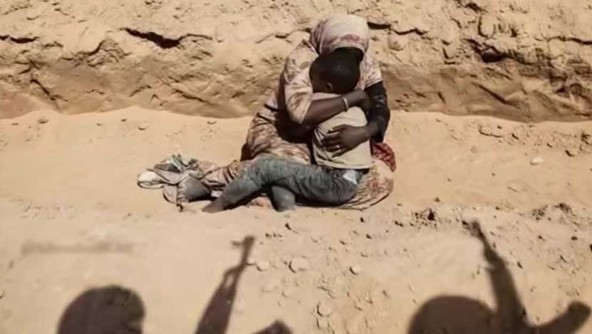
The massacres in El Fasher and across Darfur reveal the scale of the horror. International reports describe thousands of civilians killed within days. Hundreds were murdered inside a maternity hospital. The United Nations and humanitarian agencies tell the same story: millions displaced, hospitals destroyed, aid blocked. Hunger and disease have become weapons of war.
This is not only a political war but also an economic one. Gold, oil, and gum Arabic are the hidden engines behind it. Sudan produces about seventy percent of the world’s gum Arabic, used in food, cosmetics, and medicine. Both the army and the RSF control production and transportation in the territories they hold. Goods are smuggled through Chad, Egypt, and South Sudan into global markets. The war finances itself and feeds on death.
This system is a modern version of classical colonialism. The RSF is backed by the United Arab Emirates, Libya’s Haftar forces, and Israel, while Egypt, Russia, and China support the army. International corporations have joined this war economy to maintain or expand their share in the gum Arabic trade.
The silence surrounding Sudan is not accidental. States, companies, and intermediaries that profit from the conflict have no interest in bringing attention to it. Diplomacy, trade, and media operate in the shadow of economic interests. Silence has become a deliberate policy that keeps modern colonialism alive. The ruling classes closes their eyes to protect trade and alliances, and the people pay the price.
Women and children are the main victims of this war. Rape, forced marriage, the burning of villages, and mass executions are widespread. The fragile health system has collapsed. Cholera and other diseases spread quickly while aid convoys are attacked. UN reports warn that Sudan is on the brink of total social collapse.
The war in Sudan exposes how imperialism functions today. It is not a clash between two generals but a system in which capital, states, and arms networks unite in the pursuit of profit and power.
The silence of the governments of the different countries in the world is not indifference, it is complicity. Those who speak loudly of democracy fall silent when their interests are at stake. Yet the global solidarity of the antiimperialist masses have shown for Palestine proves that silence can be broken.
Sudan’s tragedy is not a local event but part of the structural contradictions of the imperialist system itself. On one side there is hunger, destruction, and death. On the other, a global economy that profits from catastrophe. Capitalism cannot exist without crisis. War, exploitation, and devastation are not exceptions to the system, they are its foundations. What is happening in Sudan cannot be separated from the occupation in Palestine, the mining exploitation in Congo, or the instability in the Sahel. As wounds continue to bleed in Ukraine and Palestine, Venezuela stands next in line. All of these are different faces of the same mechanism. The solution cannot come from one country alone. It must come from a united and international front of solidarity among all oppressed peoples. Antiimperialism is not a slogan, but a historical stance essential for humanity to live with dignity.
The liberation of Sudan is bound to the liberation of Palestine and of all peoples who resist exploitation and domination.
What happens in Sudan today follows a pattern that repeats across the world: economic dependency, military control, massacres, and international silence. The destruction in Sudan is not an isolated tragedy but a reflection of the global order of imperialism. The same system continues to operate in Congo, Palestine, Haiti, and every corner of the exploited world. Everywhere we see the same pattern: dependency, war, and silence. Breaking this chain is no longer a moral appeal but a necessity for the survival of humanity. There are moments in history when contradictions reach such intensity that to wait becomes another form of retreat. We are in such a moment now. That is why saying “something must be done” or “an organization must be built” is no longer enough. These phrases only serve to soothe conscience while reducing political will to conference rooms and press statements.
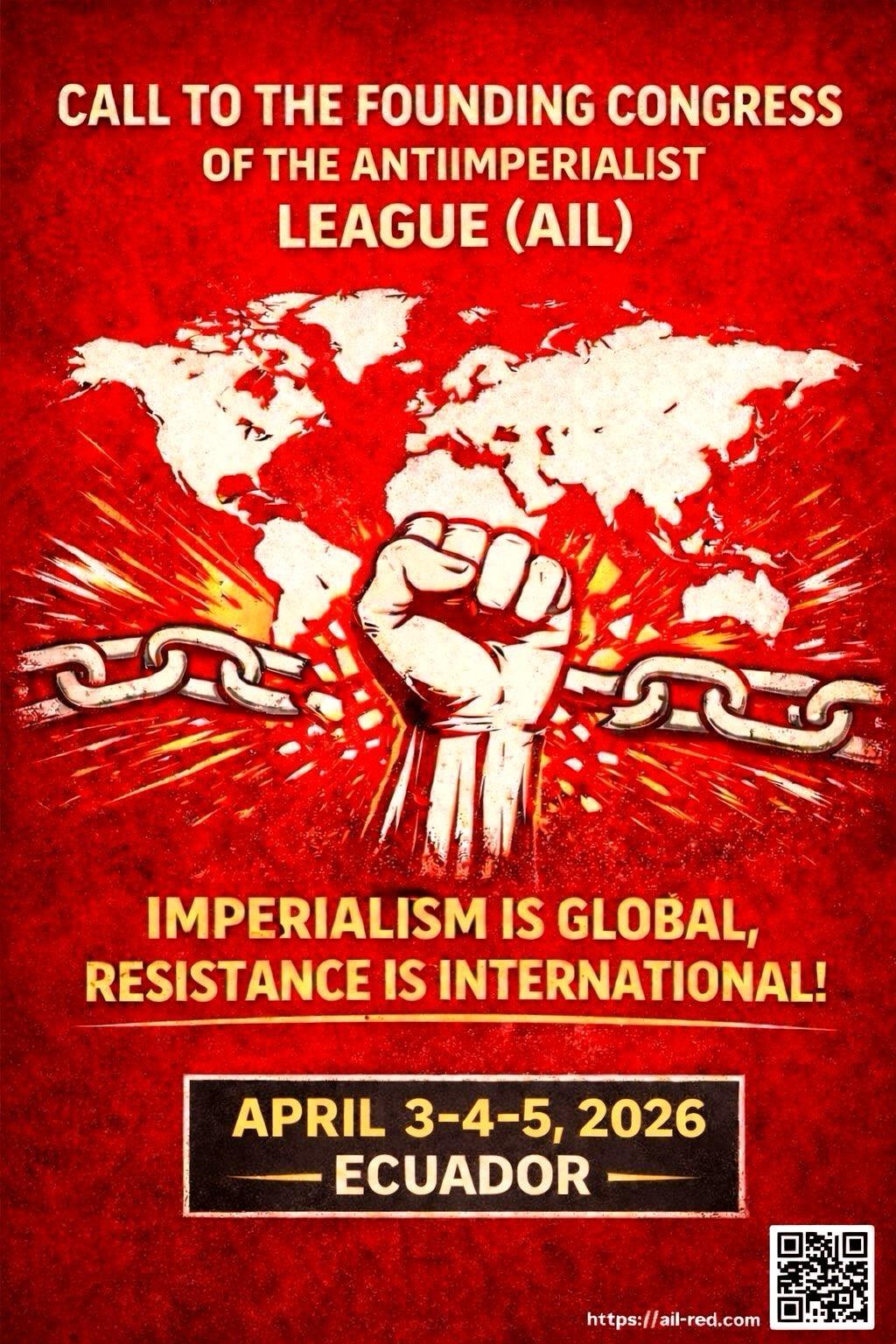
Antiimperialist organization must go beyond words. It must confront not only the symptoms but the entire structure of the imperialist system. The wars, the destruction, and the crises we witness today are not accidents, they are the inevitable consequences of this order. The Antiimperialist League (AIL) is being built with full awareness of this reality. Its formation continues as part of a historical responsibility to organize the collective will of peoples into a conscious, coordinated force against imperialism.
COORDINATING COMMITTEE OF THE ANTIIMPERIALIST LEAGUE
November 2025