September 1: Let Us Expand the Antiimperialist International Struggle Against Imperialist War
September 1 represents a day on which humanity confronts the destruction of war and fascism, standing as one of the historical beginnings of the Second Imperialist War of Division, which began with Nazi Germany’s invasion of Poland in 1939. This war, in which millions of people lost their lives, demonstrated once again how immense a destruction imperialism’s struggle to re-divide the world can bring about.
The concept of peace does not possess a supra-class, abstract content shared by all classes. It does not carry the same meaning for every class; rather, it is defined by class positions and class interests. For the proletariat and oppressed peoples, peace means true liberation, made possible through the end of exploitation and oppression and the victory of just wars and revolutionary wars. For the bourgeoisie and reactionaries of all kinds, peace means the continuation of the existing order of exploitation and domination, a peace of the graveyard.
Although the bourgeoisie is the creator of history’s greatest unjust wars, it speaks of peace today. The imperialist bourgeoisie tarnishes the concept of peace by polishing its own plunderous wars with rhetoric such as “national interest,” “security,” and “peace,” turning it into an ideological weapon aimed at co-opting the working class and oppressed peoples.
It is a historical fact that, in the European front of the Second Imperialist War of Division, the Soviet Union and the Red Army, under the leadership of Comrade Stalin, played the decisive role in defeating Nazi fascism.
The process stretching from Stalingrad to Berlin dealt heavy defeats to the Nazi war machine and accelerated the collapse of Hitler’s Germany in 1945. The imperialist-capitalist system is a system of crisis. As long as imperialism exists, wars are inevitable.
So long as the imperialist system maintains its existence, the material conditions for war will not disappear. As Comrade Lenin emphasized in Socialism and War: “War is the continuation of politics by other means. All wars are inseparable from the political systems that produce them. The policy which a given state, a given class within that state, pursued for a long time before the war is inevitably continued by that same class during the war, the form of action alone being changed.”
Therefore, to understand the character of today’s unjust wars, one must look not at the justifications put forward at the moment of war, but at the policies pursued by the ruling classes for decades prior, including the plundering of colonies, the suppression of working-class movements, and the crushing of foreign nations. The policy pursued today is nothing other than that very same policy. Truly desiring peace and genuinely standing against imperialism cannot be achieved by viewing imperialism as the aggression of this or that power, or the ambition of this or that leader.
As Comrade Lenin analyzed, imperialism is the monopoly stage of capitalism. The source of unjust wars is not the ill intentions of individual states, but the necessity for these monopolies to realize maximum profit and re-divide world markets. Ruling states are the representatives and enforcers of the interests of this monopoly capital. Consequently, the creation of a world where true peace prevails is possible not by wishing for peace in words, but by ridding ourselves of the imperialist-capitalist system based on exploitation and plunder, which is structured around the needs of these monopolies. Lasting peace will arrive only through the revolutionary overthrow of this system.
Today, the danger of imperialist war is growing once again, and unjust wars are spreading across the globe. Competition among major powers is sharpening, defense budgets are swelling, military alliances are being strengthened, and regional wars are being provoked. While imperialist alliances attempt to mask their interests, the real price of these unjust wars is paid by workers, laborers, and oppressed peoples. Under these conditions, the task is not to be co-opted by the ruling classes demagogy of preserving their own interests and presenting them as the interests of the people, nor to fall in line behind them in unjust wars, but to prioritize the independent interests of the proletariat and oppressed peoples. It is not to take a side alongside imperialists and reactionary forces, but to defend the independent revolutionary line of the working class against all imperialist powers and their war policies. It is to ensure that peoples unite not against one another, but against the reactionary capitalist-bourgeois order that exploits them and drags them into war.
Against imperialist wars and reaction, the fundamental task, in the formulation drafted by Comrade Lenin in 1915, is “to turn the imperialist war into a civil war.” This assessment serves above all as a strategic compass defining what the ideological and political stance of the proletariat ought to be. This is not a call to adventurism, but a call to conscious clarity. Only minds armed with this consciousness can take the correct stance when war becomes a practical matter. This clarity is as follows: refusing to line up alongside one’s own bourgeoisie in unjust wars, regarding “one’s own” imperialists as the principal enemy, and defending proletarian internationalism. At the same time, this slogan signifies the organization of revolutionary practice aimed at overthrowing the ruling classes and seizing power when conditions ripen, that is, when the masses grasp the true character of the war and become ready to fight for power, in alignment with this ideological clarity.
Lenin’s fundamental approach to the question of war retains its relevance today: the struggle against unjust wars cannot produce a lasting solution unless it targets the material foundations of capitalism and imperialism. Therefore, there is a need for a revolutionary anti-imperialist struggle that does not content itself merely with protesting wars, but targets the imperialist system that is their source, alongside a perspective of advancing just revolutionary people’s wars. Chairman Mao’s emphasis that “Imperialism and all reactionaries are paper tigers” expresses that imperialist powers are not invincible and that imperialism can be swept into the dustbin of history through the struggle of organized masses under the leadership of the proletarian vanguard.
We can prevent unjust wars not merely through anti-war slogans, but by expanding the revolutionary struggle against the system that produces them. September 1 must be brought to consciousness not only as a day to remember the destruction caused by war, but as a day to expand the international anti-imperialist revolutionary struggle against imperialist war and spreading unjust wars, and to raise solidarity with the struggle of oppressed peoples.
War on the Palaces, Peace to the Huts!
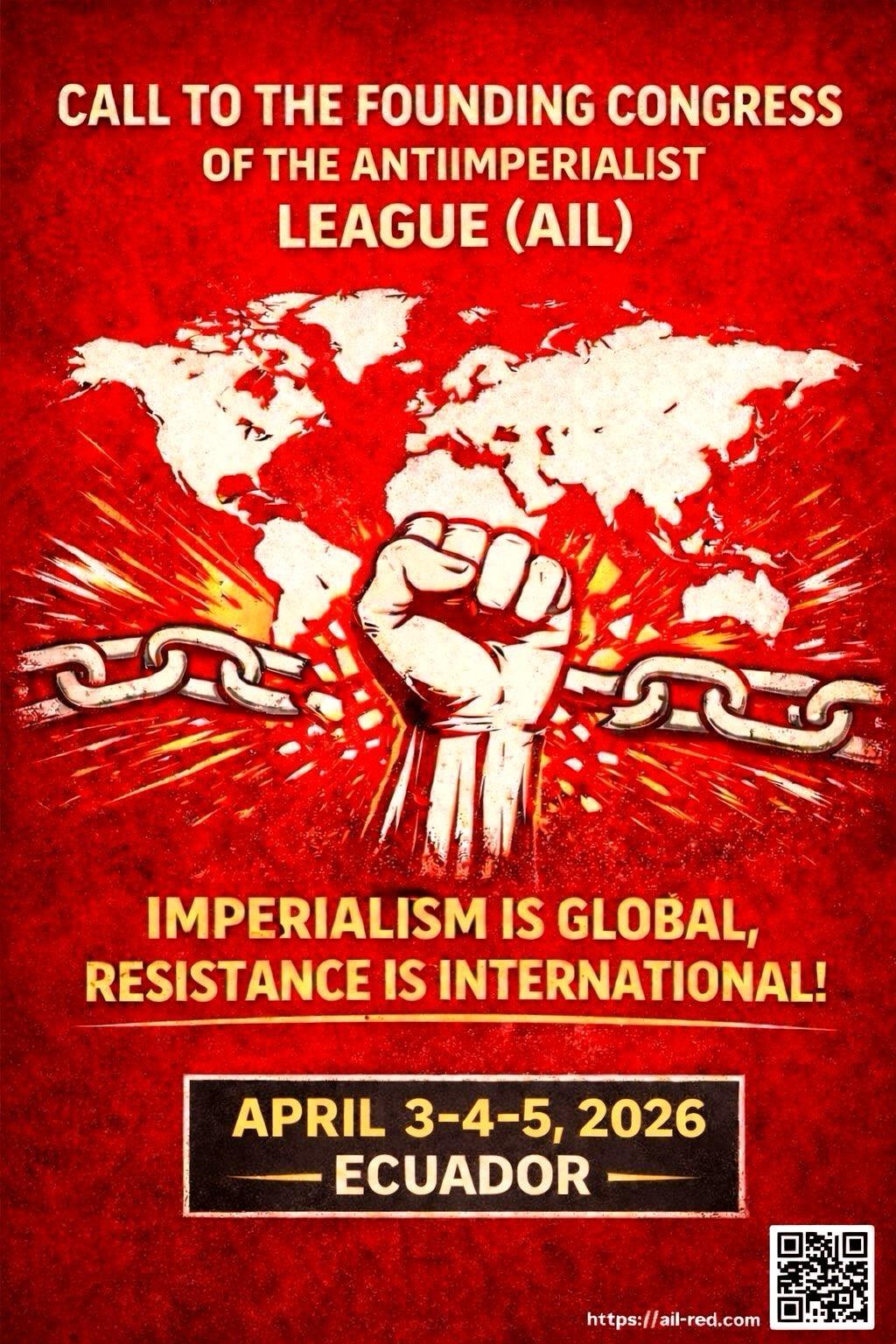
Antiimperialists of the world, unite in the ranks of the AIL!
AGEB
Source information: https://www.avrupahaber12.org/1-eylul-emperyalist-savasa-karsi-antiemperyalist-enternasyonal-mucadeleyi-buyutelim.html